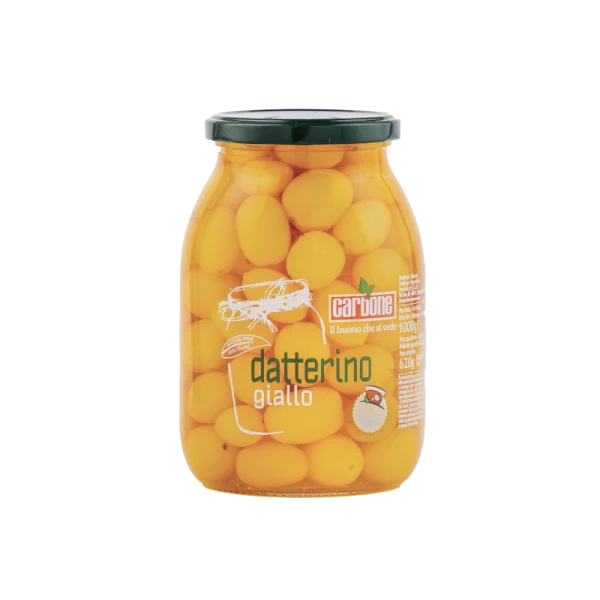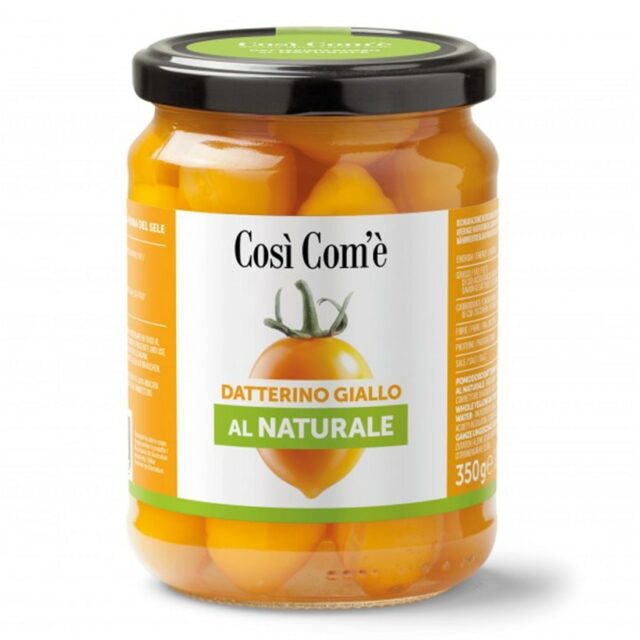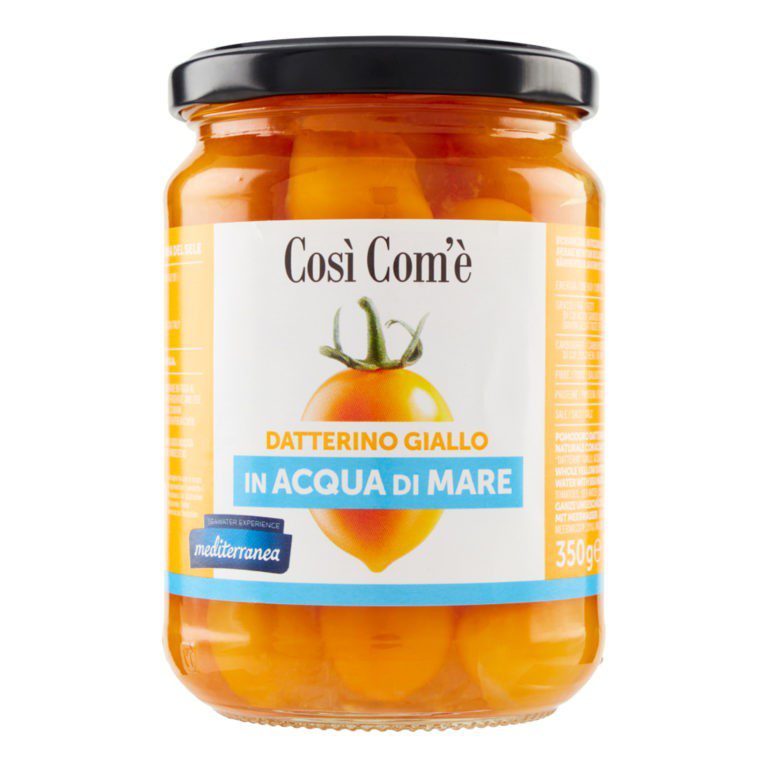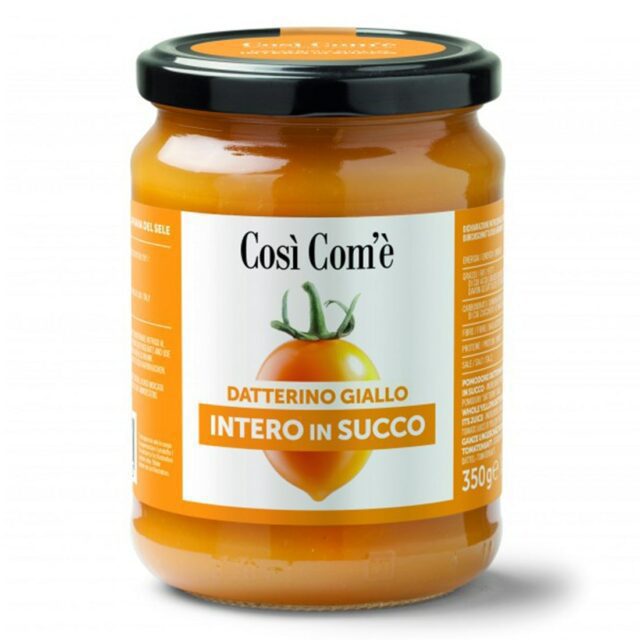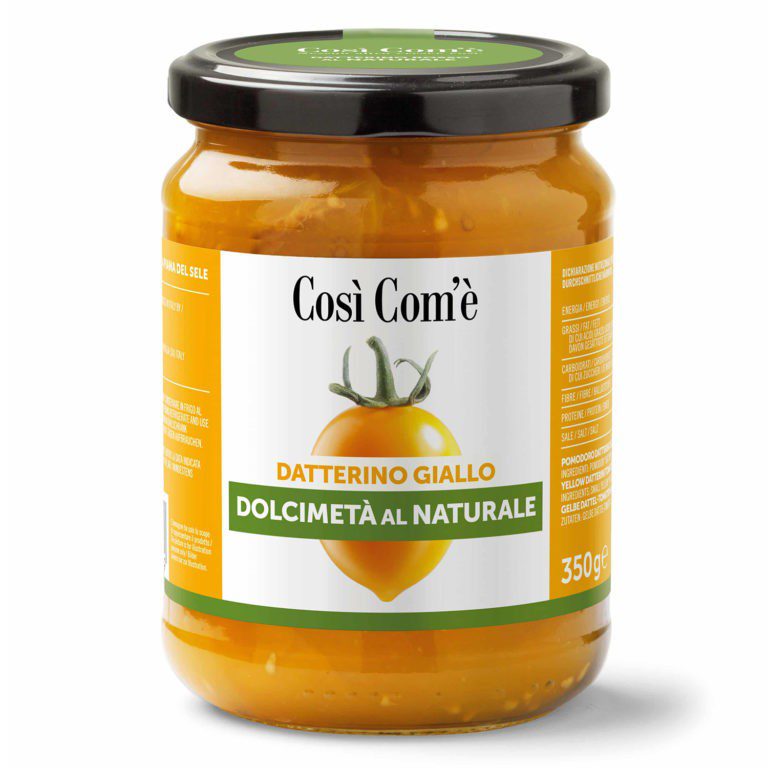
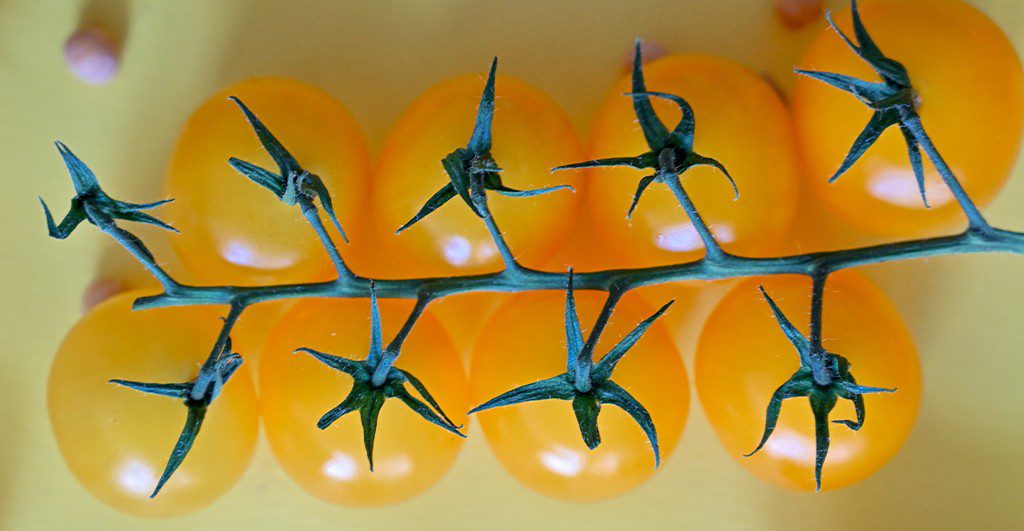
The Yellow Campano Tomato it is grown mainly in the province of Naples and in the surrounding provinces. The main recognized varieties of the place are the Piennolo yellow tomato from Vesuvius and the Yellow Datterino, two varieties distinct in morphology and intended use.
Piennolo yellow tomato from Vesuvius
The Piennolo Yellow Tomato It is native to the Vesuvius area, grown by hand and harvested between April and June. Characterized by an oval and elongated shape, it can be found hanging in bunches (like a pendulum, hence the name “piennolo“), has a golden yellow color, a rather thick skin that makes it suitable for long-term storage, and a sweet, compact pulp with very little water.
This variety is traditionally hung in cool, ventilated areas, where it can be preserved naturally for months, maintaining its organoleptic properties and intensifying its flavor over time. It is a Slow Food Presidium that protects this ancient Vesuvian ecotype.
Yellow Datterino
The Yellow Datterino It grows in regular clusters (14 to 16 fruits each). It is a very vigorous, indeterminate plant, tolerant to the main tomato diseases. The berry is round and slightly flattened, bright yellow in color, with a fleshy, juicy pulp.
Unlike classic tomatoes, yellow datterino tomatoes lack acidity. In fact, they're incredibly sweet and delicate, with a fresh, fruity aroma that makes them ideal for raw preparations: salads, tartare, bruschetta, and summer appetizers.
How to use them in the kitchen
Yellow Campanian cherry tomatoes are perfect raw in salads, mixed with classic red cherry tomatoes for a contrasting color and flavor. They're also excellent for:
- Pasta with yellow cherry tomatoes and fresh basil
- Pizza with mozzarella, yellow cherry tomatoes, and arugula
- Bruschetta with raw extra virgin olive oil
- Delicate preserves and sauces without acidity
Seasonality and availability
The ideal harvest season is between April and July, but thanks to the piennolo technique—hanging the whole bunches—yellow cherry tomatoes can be preserved and consumed well into winter. This makes them a valuable ingredient for those who love seasonal cuisine but want to maintain summer flavors even during the colder months.